
Una nobile rivoluzione is the first documentary film on the life and political engagement of Marcella Di Folco, one of the leaders of the Italian LGBTQ movement till her death in September 2010. Marcella was the first transgender person in the world to be elected to a public office. She was and is a symbol of the struggle for civil rights in Italy and a charismatic leader.
After 4 years of work and the recent participation at the Turin Film Festival, Una nobile rivoluzione documentary is ready for distribution and needs a collective effort to make possible the distribution of the film on DVD with subtitles.
A crowd-funding campaign is open till April 18th and is needed for acquiring the rights for the DVD distribution of some of the archival images, as RAI clips of the films in which Marcella played, Italian national television (RAI) and radio interviews were used in the editing of the film to give a glimpse of the beauty and complexity of Marcella’s life and her endlessly inspiring struggles for justice.
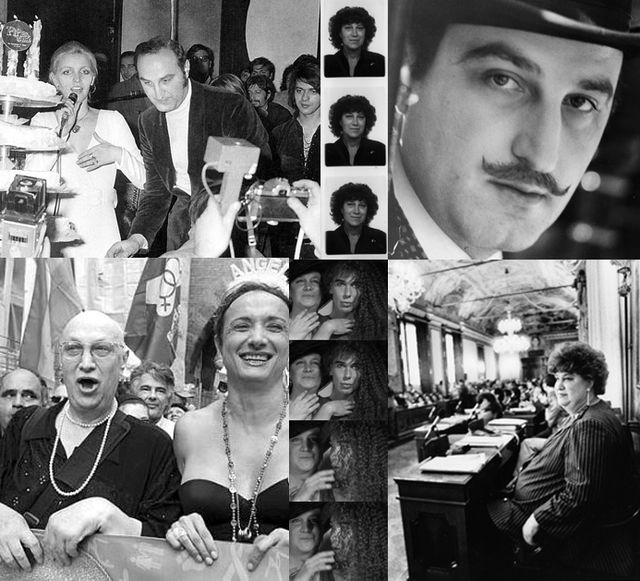
Una nobile rivoluzione documentary goes through the many lives of Marcella. The one at the Piper Club – an historical club in Rome which was the meeting point of the great names of arts and entertainment of the Sixties and Seventies as Gassman, Zeffirelli, Anna Magnani, Alberto Bevilacqua, Nureyev, Monica Vitti, Albertazzi, Ugo Tognazzi, Lina Wertmuller, and many others.
The one as as an actor in the golden age of Italian cinema, working with Federico Fellini in Satyricon, I clown, Roma, Amarcord, Casanova and City of Women, with Elio Petri , Dino Risi, Roberto Rossellini and other famous Italian directors.
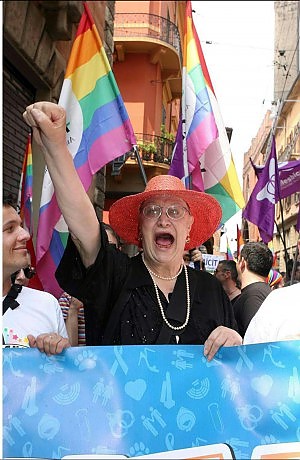
Marcella leading the Bologna Pride in 2008
In 1988 she becomes president of MIT, giving a new impetus to its activities and dedicating her life to politics. Marcella Di Folco was and id one of the most significant figures of the struggle for civil rights in Italy over the last forty years – the years of Berlusconi, Pope John Paul II, Pavarotti and Maradona…
 QueerArtLab
Pingback: L’ultima battaglia di Marcellona (perché il nostro diritto ad amare non deve essere riconosciuto?)·